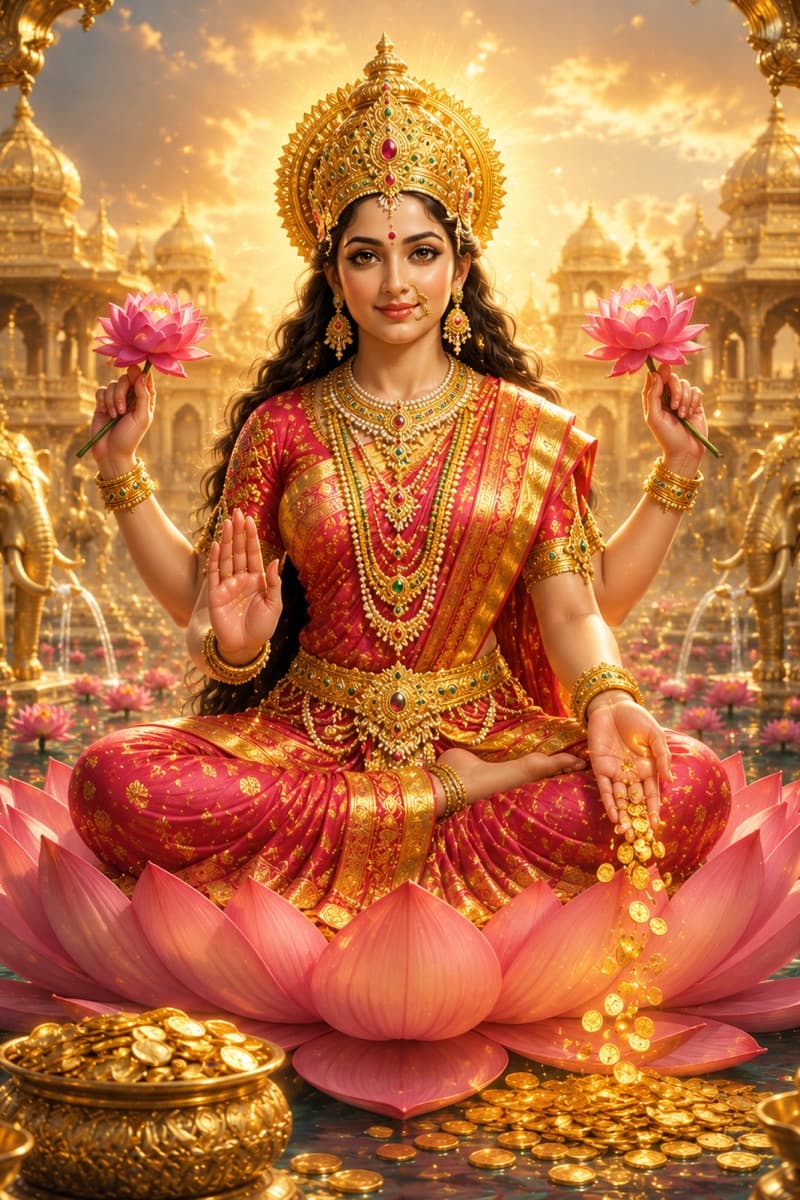
Goddess of Fortune
Lakshmi
Risen fully formed from the churning of the cosmic ocean, seated on a lotus that never touches the mud beneath it — the goddess of wealth who follows righteousness, never the reverse.
- origin
- Emerged from the churning of the ocean of milk
- symbol
- Lotus and gold coins
- epithet
- Sri, Mahalakshmi
- role
- Goddess of wealth, fortune, and abundance
When gods and demons churned the Ksheera Sagara together in search of amrita, treasure after treasure rose from the depths before the nectar itself appeared — and among the finest of them was Lakshmi herself, emerging fully formed and seated already on a lotus, radiant enough that both sides paused the churning just to look.
The Lotus That Stays Clean
Lakshmi's seat, always a blooming lotus, is deliberate: the flower grows rooted in mud yet opens each morning untouched by it, exactly as prosperity is meant to touch the world without being corrupted by it. She is shown with coins spilling from one open palm — wealth given freely, never hoarded.
She Follows Dharma, Not the Other Way Around
The oldest teaching about Lakshmi is also the sharpest: she does not attach herself to power for its own sake. She is drawn to righteousness, and leaves the moment it is abandoned — which is why, in tradition, kingdoms built on injustice eventually lose their fortune no matter how strong they first appear, and why Lakshmi's true devotees are taught to seek dharma first, wealth second.
Consort of Vishnu, Present in Every Age
Wherever Vishnu descends to restore balance, Lakshmi is rarely far — she is Sita beside Rama, just as she stands beside Narayana in Vaikuntha. Each Diwali, it is her return that is celebrated above all — the lamps lit not merely for light, but to welcome fortune back into a home that has kept itself worthy of her.