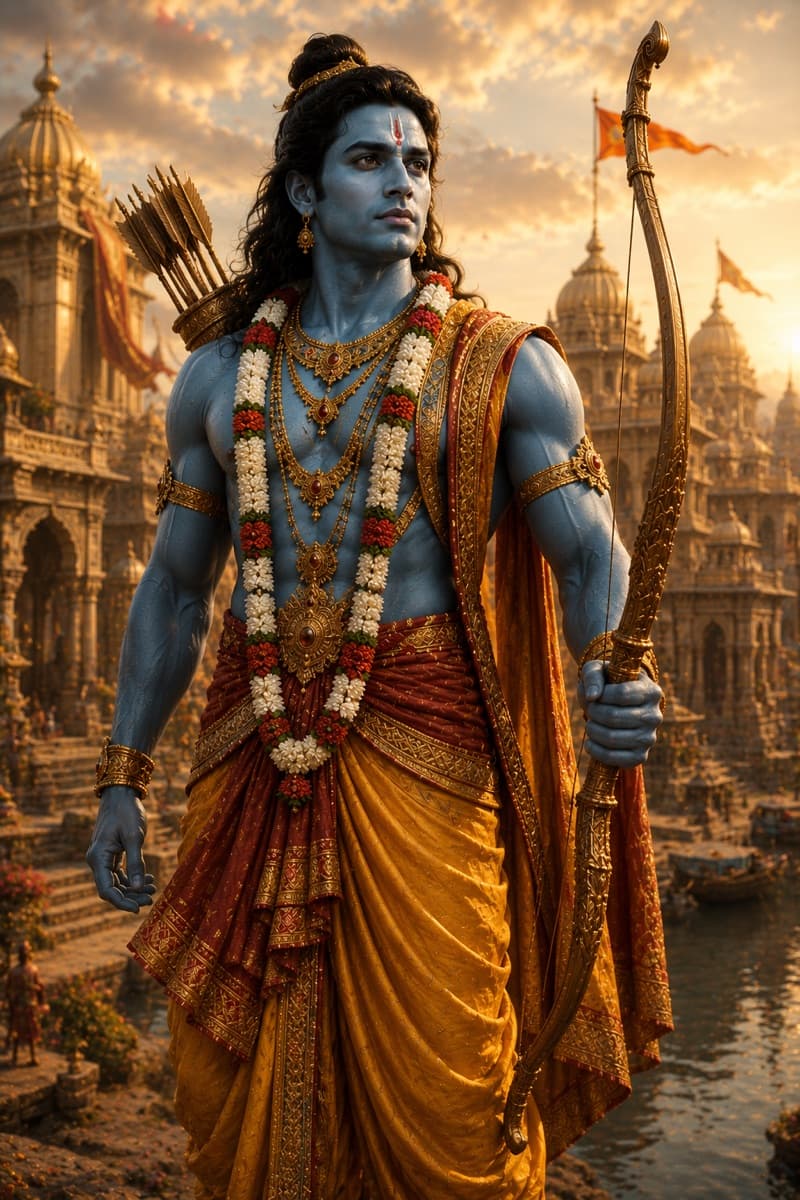
Maryada Purushottam
Ram
The seventh avatar of Vishnu — prince of Ayodhya, exile of fourteen years, breaker of Shiva's bow, slayer of Ravana, and the measure by which dharma itself is measured.
- weapon
- Kodanda bow
- avatar
- Seventh avatar of Vishnu
- abode
- Ayodhya
- epithet
- Maryada Purushottam
Other gods are worshipped for their power. Ram is worshipped for his restraint. The seventh avatar of Vishnu was born a prince of Ayodhya with every advantage heaven could grant — and his story is a lifelong lesson in giving advantages up.
The Bow That Broke
At Janakpur, kings from across the earth had failed even to lift the great bow of Shiva. Ram, asked by his guru to try, lifted it, strung it — and it snapped like a thunderclap heard across three worlds. Sita, daughter of the earth, garlanded him, and the two ideals of the epic were joined.
The Exile
On the eve of his coronation, his stepmother Kaikeyi claimed two old boons: her son on the throne, Ram in the forest for fourteen years. The Ramayana's turning point is not the demand — it is Ram's face when he hears it. He did not argue. A father's word, he held, outweighed a kingdom.
He walked out barefoot with Sita and Lakshman, and when his brother Bharat came begging him to return, Ram gave him only his sandals — which ruled Ayodhya from the throne for fourteen years.
The War for Sita
When Ravana stole Sita, the exiled prince without an army raised one from the forest itself — vanaras, bears, an eagle king, and a devotee named Hanuman whose leap found her across the sea. Ram bridged the ocean with floating stones bearing his name, and before the gates of Lanka gave even his enemy a final chance: return her, and live.
Ravana refused. Ten heads fell. And on the day of that victory, India still lights its lamps — Diwali is the road home from Lanka, burning across every threshold in the land.
The Measure of Men
Ram is called Maryada Purushottam — the supreme man within limits — because he never once used his divinity as an exemption. He wept, bled, doubted, grieved like a man, and still chose dharma at every fork, especially when it cost him most.
Gandhi died with his name on his lips. Millions still greet each other with it. In the villages of India, "Ram Ram" simply means hello — as if to say: the measure of all goodness, once, walked here.