The Lord of Three Arrows
Barbarik
Grandson of Bhima, mightiest warrior of his age — who never fired a shot at Kurukshetra, gave his head to Krishna before the war began, and is worshipped today as Khatu Shyam, the refuge of the defeated.
- weapon
- Three infallible arrows
- lineage
- Son of Ghatotkacha, grandson of Bhima
- worshipped
- Khatu Shyam Ji, Khatu (Rajasthan)
- epithet
- Haare ka Sahara — refuge of the defeated
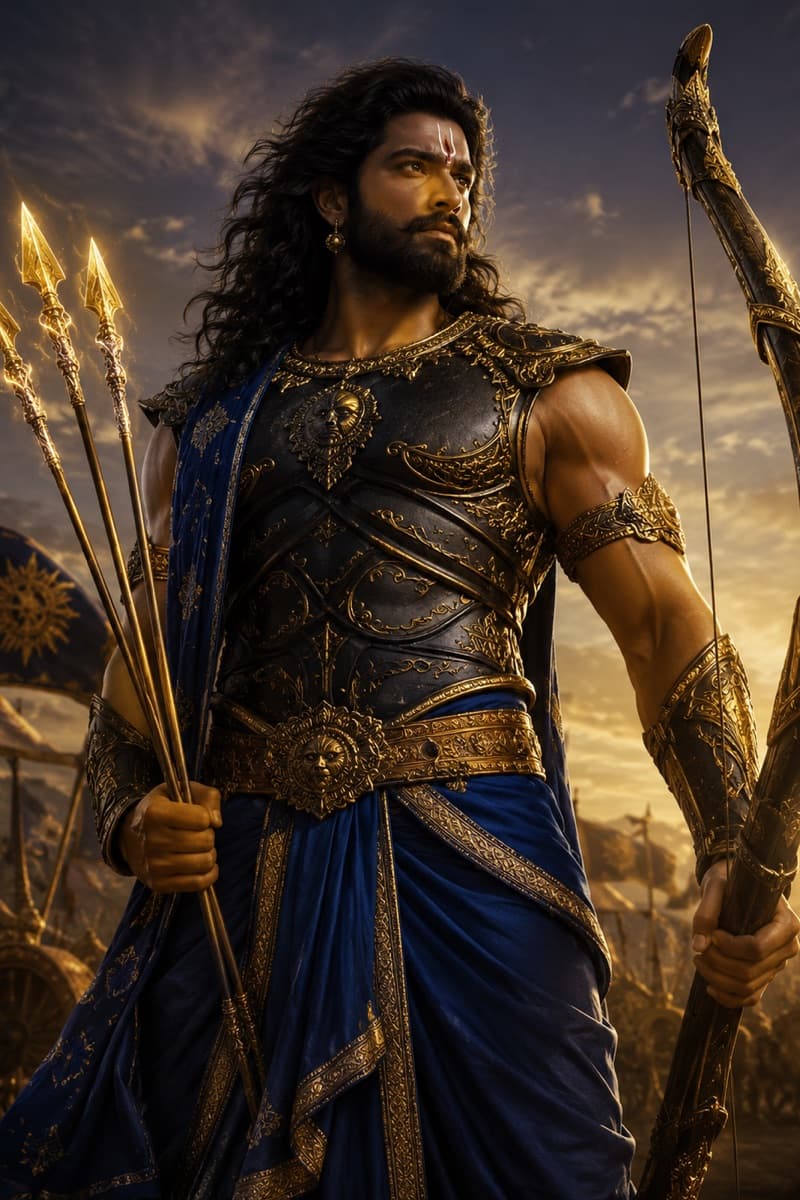
The greatest warrior of the Mahabharata never fought in it. He was Barbarik — son of Ghatotkacha, grandson of Bhima — a boy who rode toward Kurukshetra on a blue horse carrying a quiver of just three arrows, and rode into eternity instead.
Teen Baan Dhaari
Barbarik's penance to the goddess won him three arrows that broke every law of war. One marked all he wished to destroy, one marked all he wished to spare, and the third destroyed everything marked — then flew home to his quiver. Three arrows, and no army in creation could stand for longer than a minute.
When a disguised Krishna mocked the tiny quiver, Barbarik pinned every leaf of a peepal tree with a single shot — and the arrow then hung patiently over Krishna's foot, under which the last leaf was hidden. Nothing marked could be saved. Not even by God.
The Fatal Vow
He had promised his mother he would always fight for the losing side. Krishna alone saw the arithmetic of doom in it: whichever side Barbarik joined would start winning, flinging him to the other side, then back, forever — until both armies lay in ashes and one boy stood alive on the field.
The Head on the Hill
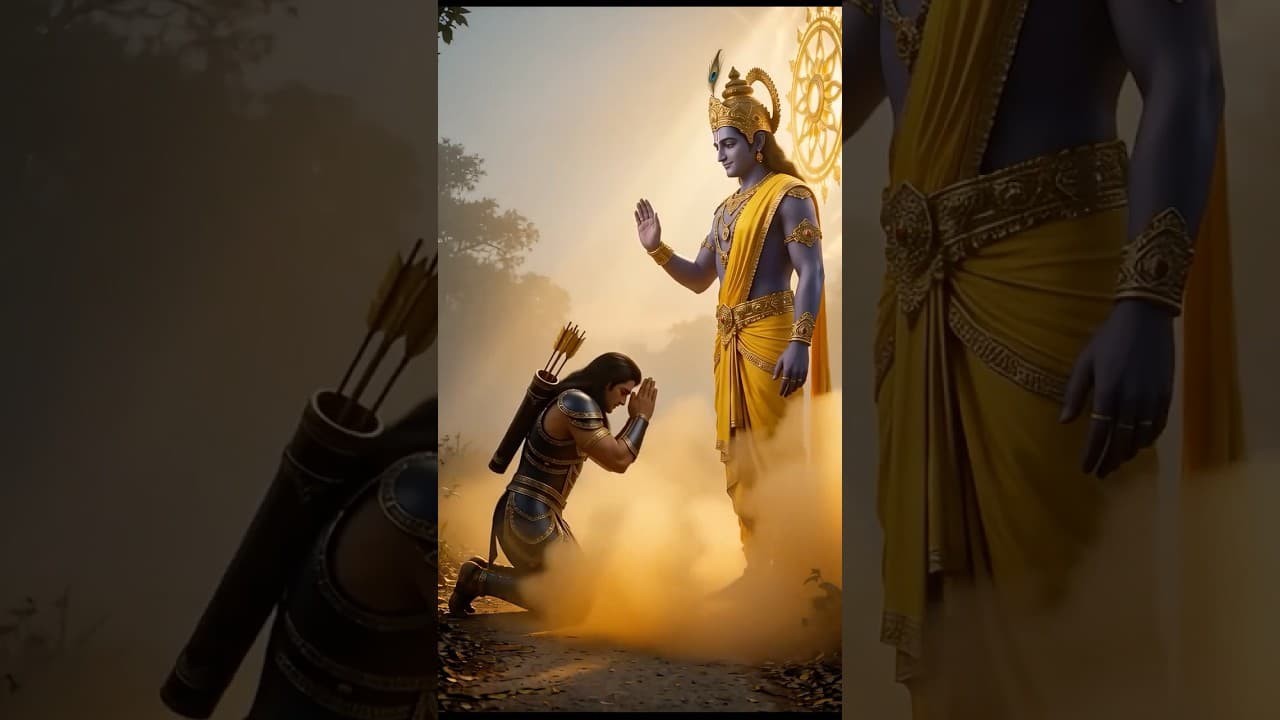
So before the first conch of the war, Krishna asked him for the greatest gift ever requested of a warrior — his own head. Barbarik recognized who was asking. He asked only to watch the war, then gave his head smiling.
From a hilltop above Kurukshetra, the head watched all eighteen days. When the victors quarreled over credit, it laughed: it had seen only one warrior on that field — Krishna's chakra, spinning through everything.
Shyam of Kali Yuga
Moved by the sacrifice, Krishna granted Barbarik his own name and worship in the age to come. At Khatu in Rajasthan, where the head was found centuries later in the earth, millions now stand in line through the night calling him Khatu Shyam — "Haare ka sahara" — the one god who fights, always and only, for the losing side.